
Why we’re called Transit
Named for the thing that binds a town together.
In a small town the car is the status symbol and the bus is an afterthought — yet only about half the driving-age population owns a vehicle. Transit here isn’t an amenity. It’s access.
So we put it at the centre of our plans, and took its name. Two of the city’s three bus lines already stop at Stewart Village. We’re building the terminal that brings the third.
In tier-two and tier-three markets, nobody talks about walking scores. We think that’s exactly the opportunity.
Walkability. Density done gently. Daily needs within a short walk. Ordinary in a big city, quietly radical in a small one — where even the drive-through is designed around the person on foot.
The raw material
Dead retail is a civic problem. It’s also a gift.
Every small city has one: the anchor that left, the parking lot bigger than the business it serves. The market calls it obsolete. We see land already zoned, already serviced, already on the bus line.
The Core was a paintball hall the size of a city block. We cut its big bays into smaller rooms — more rent per foot, more rentable area — and filled them with what the town lacked.
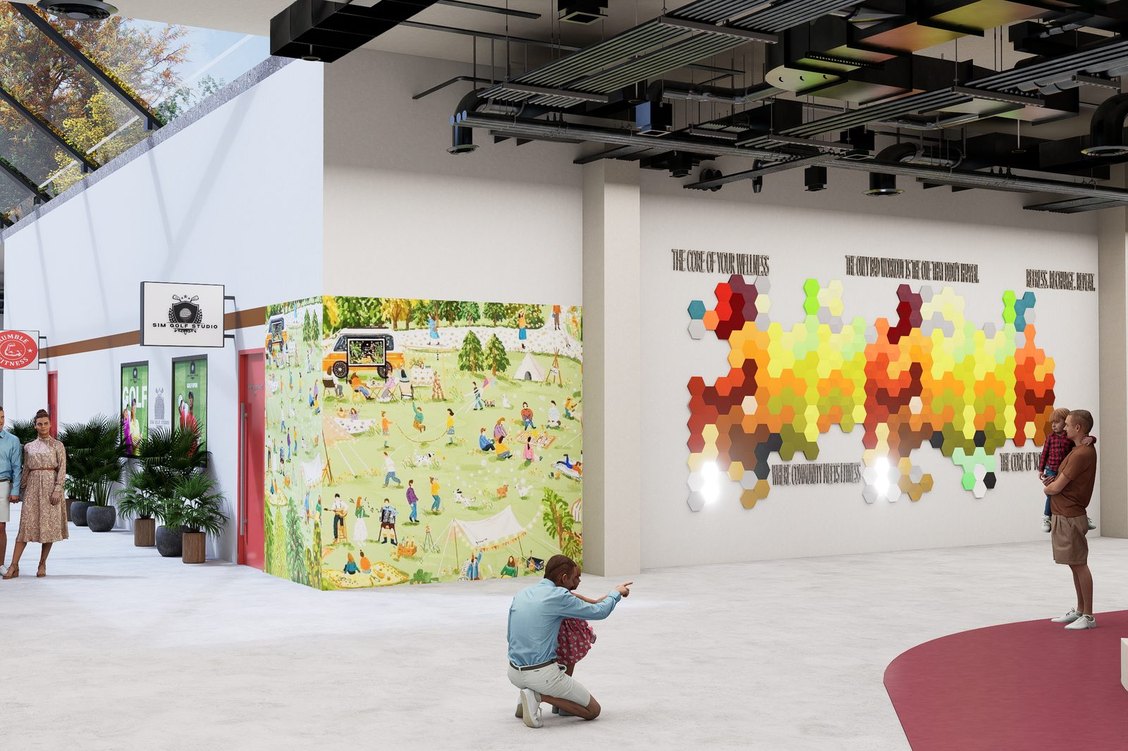 Artist’s concept
Who fills it
Not brands. Neighbours.
The Core’s roster isn’t a leasing brochure — it’s a town, indoors.
- Stingers Paintball — the original tenant, still playing
- The Capitol Axe Throwing
- Mint Pole & Aerials
- Aaron’s Musical Instrument Lending Library
- Jamaica One Love Kitchen
- And on the retail strip, a barber who liked the corner so much he built a lounge next door.
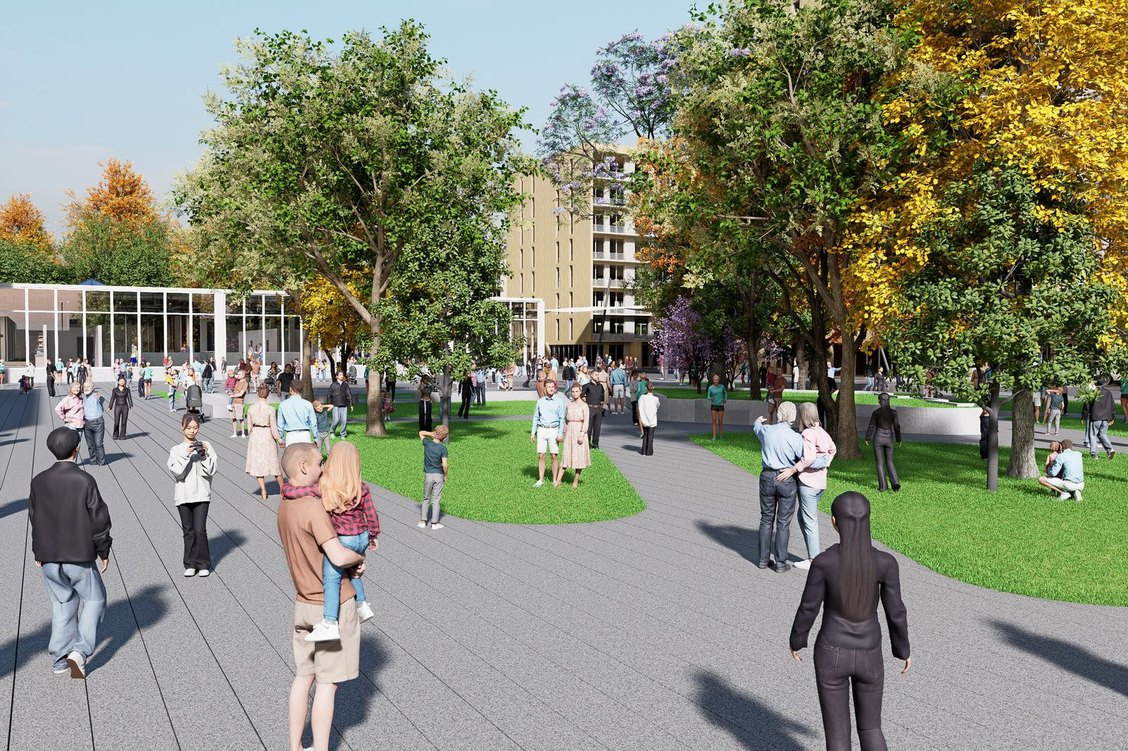 Artist’s concept
Urban biodiversity
A park that earns its keep before it earns a cent.
The centre of Stewart Village is a public park — a use that pays no rent, which is why most developers never build one. We’re solving it the way we solve everything: with partners.
A regional land trust and a UNESCO-designated biosphere organisation, designing one urban acre to do what a reserve does across a thousand. A park with no rent roll is a real financial problem. We’d rather show our work than pretend otherwise.